Automated PVDF Valve Selection for High-Value Process Lines
An actuated PVDF ball valve is selected when the process needs two things at the same time: reliable material performance for the fluid and repeatable automatic control for the system.
For semiconductor chemical systems, pharmaceutical process equipment, fine chemical plants, electronic chemical supply skids, and automated dosing lines, PVDF selection should not stop at the valve body. The project also needs to define the medium, purity expectation, temperature, pressure, seal material, control method, fail position, connection standard, and maintenance route.
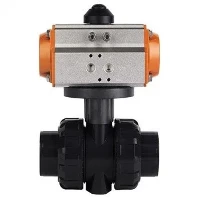
Start with the SANKING PVDF Ball Valve category, then choose manual, pneumatic, or electrical actuation according to the real process duty.
Treat the Valve as Two Connected Systems
An automated PVDF ball valve has a wetted process side and an external control side. Both must be right before the valve can work reliably in a sensitive chemical line.
| System Side | What It Includes | What Can Go Wrong |
|---|---|---|
| Wetted process side | PVDF valve body, ball, seats, stem seals, union ends, pipe, fittings, medium, temperature, pressure, and cleanliness requirement. | Wrong material or seal can lead to leakage, swelling, hard operation, contamination concern, or short service life. |
| External control side | Pneumatic or electric actuator, bracket, solenoid valve, limit switch, cable entry, power supply, air source, feedback signal, and PLC connection. | Wrong actuator selection can create failed sequencing, poor access, missing feedback, incompatible voltage, or an unsafe response during a utility loss. |
Procurement rule: Do not approve the PVDF valve body first and leave actuation for later. The body, seals, actuator, signal requirement, and maintenance arrangement should be confirmed in the same quotation cycle.
Six Questions to Answer Before Choosing the Actuator
Pneumatic and electric actuators solve different control problems. Use these six questions before selecting either direction.
| Selection Question | Why It Changes the Valve Configuration |
|---|---|
| What is the exact medium? | The chemical name, concentration, and purity requirement decide whether PVDF is suitable and which seal direction needs review. |
| What temperature and pressure will the valve see? | A high-temperature or pressure-pulse condition can change the available safety margin, seal performance, and actuator torque requirement. |
| How often will the valve cycle? | A valve that switches twice a month has a different actuator requirement from a dosing or process line that cycles many times per shift. |
| Is compressed air available and stable? | Pneumatic automation needs a reliable air source, correct pressure, suitable air quality, and a clear fail-open or fail-close requirement. |
| What does the PLC need to know? | The project may only need open and close status, or it may need fault feedback, communication, position signal, or a more advanced control strategy. |
| What must happen during power or air loss? | The valve may need to stay closed, stay open, return to a safe position, or follow a project-specific shutdown sequence. |
Pneumatic vs Electric PVDF Actuation
The actuator decision should follow process behavior and site utilities. Pneumatic is usually the stronger route for fast repeated on/off action where clean compressed air is already available. Electric is often the cleaner route when the project depends on remote cabinet control, feedback signals, or an installation without an air supply.
| Decision Point | Pneumatic PVDF Valve | Electric PVDF Valve |
|---|---|---|
| Best process fit | Frequent on/off switching, fast sequence control, automatic dosing isolation, and systems with reliable plant air. | Remote on/off control, packaged equipment, PLC-controlled systems, and locations without compressed air. |
| Failure position | Single-acting configurations can be reviewed where the project requires normally closed or normally open response after air loss. | Confirm the required power-loss behavior before ordering. Do not assume every electric actuator has the same fail-safe response. |
| Control hardware | Air filter, solenoid valve, limit switch, air tubing, bracket, and correct control-air pressure. | Voltage, cable entry, control wiring, open/close/fault feedback, enclosure condition, and panel integration. |
| Maintenance focus | Air quality, solenoid function, tubing condition, actuator cycle behavior, and feedback accessories. | Wiring integrity, actuator status, cable gland condition, enclosure protection, and feedback confirmation. |
| Common mistake | Choosing pneumatic control without confirming air quality, air pressure, or the required safe position. | Choosing an on/off electric actuator for a process that actually needs modulating or position-control capability. |
For high-temperature, strongly corrosive, and sensitive-media systems that need pneumatic automation, review the Pneumatic Actuated PVDF True Union Ball Valve.
For remote electrical control and standard on/off automation, review the Electrical Actuated PVDF True Union Ball Valve.
High-Purity and Sensitive-Media Projects Need a Different Review
A high-purity or sensitive-media project should not be approved by saying only "PVDF is corrosion resistant." The buyer also needs to define what purity means in the real system: water quality target, chemical grade, flushing process, cleaning method, contamination sensitivity, documentation requirement, and project validation rules.
Semiconductor, pharmaceutical, and electronic chemical projects may have additional customer or process requirements beyond the valve material itself. Confirm those requirements separately before approving a standard product configuration.
| Process Scenario | Primary Valve Concern | Additional Review Point |
|---|---|---|
| High-purity water loop | Material consistency, clean maintenance, true union removal access, and matching pipeline components. | Confirm project cleanliness standards, flushing procedure, connection method, and whether the entire flow path needs PVDF components. |
| Sensitive chemical supply | Chemical compatibility, seal selection, automated isolation, and leakage-risk control. | Confirm chemical concentration, temperature, storage time, cleaning chemical, and shutdown requirement. |
| Automated dosing skid | Cycle frequency, valve response, actuator control method, and maintenance access inside the skid. | Confirm whether the project needs simple on/off action, interlocks, signal feedback, or a more advanced control method. |
| Strong corrosive chemical transfer | PVDF body suitability, FPM / EPDM / PTFE seal direction, pressure-temperature condition, and actuator environment. | Confirm whether vapor, mist, splash, or corrosive gas can affect the actuator shell, bracket, cables, or solenoid accessories. |
Seal Selection Can Change the Final PVDF Configuration
PVDF may be the right valve body material, but the seal still decides whether the valve remains reliable in the real chemical condition. Chemical name, concentration, temperature, pressure, cleaning process, and contact time all matter.
The pneumatic PVDF true union configuration lists reversible PTFE seats, double O-ring stem seals, FPM O-rings as the standard option, and EPDM upon request. Use those options as a technical starting point, then confirm the exact seal choice against the project medium before quotation.
| Seal Review Question | Why It Matters |
|---|---|
| What is the exact chemical name? | "Strong acid," "chemical liquid," or "solvent" is not enough to approve FPM, EPDM, PTFE, or another seal direction. |
| What is the concentration? | The same chemical can affect seals differently at dilute and concentrated conditions. |
| What temperature will the seal see? | Temperature affects chemical compatibility, compression behavior, leakage risk, and operating torque. |
| Does the valve remain closed for long periods? | Long chemical contact time can increase swelling, sticking, or torque changes at the seat and stem seal area. |
| Does the system use cleaning or flushing chemicals? | The valve may see a second medium during cleaning, flushing, or maintenance that also needs compatibility review. |
Temperature and Pressure: Do Not Read Them Separately
PVDF is often selected because the project needs more chemical and temperature margin than lower-grade plastic materials can provide. That still does not mean the valve can be approved without checking actual pressure at the operating temperature.
| Operating Condition | What to Check Before Approval |
|---|---|
| Normal process temperature | Confirm the daily operating temperature, not only the tank or room temperature. |
| Peak or upset temperature | Check chemical reaction heat, cleaning cycles, hot flushing, nearby equipment heat, and temporary process upset conditions. |
| Line pressure | Confirm normal pressure, pump discharge pressure, pressure pulses, static head, and any shutoff or dead-head condition. |
| Valve operating torque | Higher temperature, seal friction, deposits, and long idle periods can influence torque and actuator sizing. |
Selection warning: Do not use a published maximum material temperature as the project operating temperature. Confirm the selected valve model, pressure, medium, seal, and actuator requirement together before placing the order.
True Union Structure Makes Automated Maintenance Easier
In high-value chemical systems, a valve should be maintainable without turning a simple replacement into a pipe reconstruction project. A true union body allows the valve carrier to be removed from the pipeline when service access has been designed correctly.
This is useful near chemical tanks, pumps, dosing skids, filter assemblies, semiconductor process modules, and high-purity equipment where maintenance space and clean reassembly matter.
| True Union Maintenance Check | Why It Matters |
|---|---|
| Union nut access | The valve is only service-friendly when technicians can reach the union nuts with safe clearance. |
| Actuator removal space | Leave enough room above or beside the valve for actuator inspection, wiring work, and replacement. |
| Pipe support near the valve | Support the pipeline so the actuator and valve body do not carry pipe weight or vibration load during servicing. |
| Clean replacement process | Sensitive media systems need a defined maintenance method for removal, inspection, seal replacement, reassembly, and leak checking. |
For manual isolation and maintenance-focused PVDF piping systems, review the PVDF True Union Ball Valve together with the actuated configuration.
Match the Valve With PVDF Fittings and Piping
A high-value PVDF automated valve should not be treated as an isolated item. The connection standard, fitting material, pipe system, installation method, and maintenance arrangement need to match the valve.
| System Item | What to Confirm |
|---|---|
| Valve connection | Socket, threaded, or flanged end; ANSI, DIN, JIS, CNS, NPT, PT, BSPF, or project-specific standard. |
| PVDF fittings | Confirm the fitting material, size, joining method, and system standard before finalizing the valve order. |
| Pipeline support | Confirm support spacing, vibration control, thermal movement, and actuator load near the valve. |
| Installation and maintenance space | Leave access for union removal, actuator servicing, cable work, air tubing, and leak checks. |
Review SANKING Plastic Fittings with the PVDF valve configuration before locking the full piping package.
RFQ Checklist for PVDF Automated Control
A complete RFQ should describe the process, the automation duty, and the maintenance requirement. Sending only "PVDF electric valve" or "PVDF pneumatic valve" usually leads to more questions and a slower technical review.
| RFQ Field | What to Provide |
|---|---|
| Application | Semiconductor chemical line, pharmaceutical equipment, fine chemical system, electronic chemical supply, high-purity water loop, automated dosing skid, or corrosive transfer line. |
| Working medium | Exact chemical name, water quality, chemical grade, concentration, and whether the fluid changes during operation or cleaning. |
| Purity or process requirement | General chemical service, high-purity water, sensitive chemical handling, project documentation requirement, or customer-specific validation requirement. |
| Temperature and pressure | Normal temperature, maximum temperature, cleaning temperature, normal pressure, pump pressure, pressure pulse, and shutdown condition. |
| Valve size and connection | DN or inch size; socket, threaded, flanged, true union; ANSI, DIN, JIS, CNS, NPT, PT, BSPF, or project-specific standard. |
| Seal material | FPM, EPDM, PTFE, or supplier-confirmed seal direction based on medium, concentration, temperature, and cleaning process. |
| Actuator type | Pneumatic or electric; include single/double acting, normally open/closed requirement, or on/off / intelligent control requirement. |
| Control requirement | Air supply pressure, AC220V, DC24V, 110V requirement, open/close/fault feedback, PLC interlock, signal type, or communication requirement. |
| External environment | Indoor or outdoor, humidity, washdown, corrosive gas, acid mist, dust, cable routing, actuator bracket requirement, and IP66 requirement where applicable. |
| Maintenance and spare plan | True union removal requirement, spare O-ring kit, actuator spare, bracket requirement, solenoid valve, limit switch, and quantity for critical lines. |
| Quantity and delivery plan | Sample quantity, pilot-line quantity, project quantity, annual usage, spare quantity, equipment standardization plan, and destination market. |
Quotation note: Separate "Valve Body Material," "Seal Material," "Actuator Type," "Control Signal," and "Fail Position" into individual RFQ fields. This prevents a high-value PVDF automation project from being quoted as a basic manual valve with missing control details.
Final Selection Logic
Choose a PVDF actuated ball valve when the line needs high chemical stability, a stronger temperature margin, controlled isolation, and an automated response that matches the process.
Choose pneumatic actuation when the system has stable compressed air, needs fast repeated switching, and has a clear normally open, normally closed, or double-acting control requirement.
Choose electric actuation when the system depends on remote control, cabinet wiring, open/close/fault status, PLC integration, or an installation without compressed air.
Confirm the exact medium, concentration, purity expectation, temperature, pressure, seal material, connection method, actuator configuration, and maintenance route before approving the final valve model.
For high-value chemical and sensitive-media projects, the best valve choice is the one that keeps the process side, control side, piping package, and maintenance plan aligned from the first RFQ.
Need an Automated PVDF Valve for a Sensitive Chemical Line?
Send the medium, concentration, purity requirement, normal and maximum temperature, pressure, pipe size, connection standard, seal requirement, actuator type, control signal, fail position, and expected quantity. SANKING can help match PVDF true union, pneumatic actuated, or electrical actuated valve options to your process.
Request an Automated PVDF Review Explore PVDF Ball Valve Options