As the "blood vessels" of modern infrastructure and industry, plastic pipes have been deeply integrated into many fields such as construction, municipal administration, energy, and chemical industry due to their corrosion resistance, easy installation, and low cost. From hidden pipes that transport hot and cold water in homes, to the criss-crossing sewage pipe networks underground in cities, to special pipes that carry strong acids and alkalis in industrial scenarios, different types of plastic pipes adapt to diverse needs with their unique performance. Next, I will share Several Common Plastic Pipes.
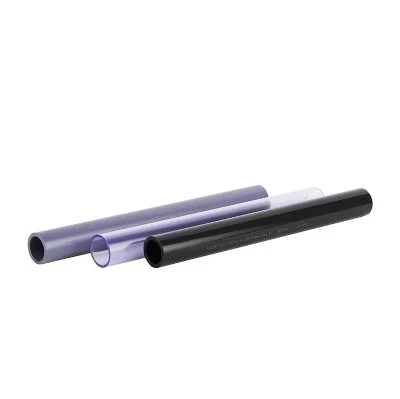
Unplasticized Polyvinyl Chloride (uPVC) Pipes
Properties:
- Rigid PVC without plasticizers, low density (≈1.4 g/cm³), cost-effective, and highly water-resistant.
- Smooth surface minimizes fluid resistance and scaling, improving water transmission efficiency.
- Limited heat resistance (long-term use ≤45°C), requiring heat stabilizers (e.g., calcium-zinc composites) for processing.
Typical Applications:
- Drainage & Sewer Systems: Sanitary sewer pipes, vent pipes (DWV pipes) in buildings, and main municipal sewer lines.
- Electrical Conduits: Protects wires/cables, meeting flame-retardant standards (e.g., UL 94 V-0).
- Chemical Anti-Corrosion Piping: Transports dilute acids, alkalis, or industrial wastewater (e.g., in electroplating plants).
High-Density Polyethylene (HDPE) Pipes
Properties:
- Made from high-molecular-weight polyethylene with a compact molecular structure, offering high strength, impact resistance, and excellent chemical corrosion resistance (against acids, alkalis, and oils).
- Flexible and heat-fusible, suitable for long-distance laying or complex terrains.
- Exceptional low-temperature tolerance (maintains toughness at -50°C), but moderate heat resistance (long-term use ≤60°C).
Typical Applications
Municipal Water Supply & Drainage
Replaces traditional cast iron pipes for buried water supply networks (resistant to soil corrosion).
Gas Transportation
Meets safety standards for gas pipelines (e.g., SDR11 series) with strong stress-crack resistance.
Agricultural Irrigation
Lightweight and easy to install for long-term outdoor use in drip or sprinkler systems.
Cross-Linked Polyethylene (PEX) Pipes
Properties:
- Molecular chains are cross-linked via chemical (e.g., DCP cross-linking) or physical (electron beam irradiation) methods to form a network structure, significantly enhancing heat resistance (long-term tolerance 95°C, short-term up to 110°C).
- Extremely flexible, can be coiled for transportation, reducing joints and leakage risks.
- Frost-heave resistant, ideal for cold regions in northern areas.
Typical Applications
Residential Plumbing Systems
Whole-house cold/hot water pipes, especially for underfloor heating coils (radiant heating).
Water Heater Connecting Pipes
Directly conveys high-temperature hot water without additional insulation.
Industrial Flexible Piping
Flexible connection segments for transporting warm fluids in chemical equipment.
Polypropylene Random Copolymer (PP-R) Pipes
Properties:
- Random copolymer modification (PP-R) of homopolypropylene (PP-H) delivers outstanding heat resistance (long-term use at 70°C, short-term up to 95°C).
- Highly regular molecular chains ensure excellent creep resistance, suitable for long-term pressure-bearing applications (0.6–1.6 MPa pressure ratings).
- Heat-fusion socket welding creates joints stronger than the pipe itself, ensuring superior sealing.
Typical Applications
Building Water Supply Systems
Cold/hot water pipes in high-rise buildings ( to prevent rust).
Solar Hot Water Piping
Directly connects solar collectors to storage tanks, withstanding cyclic temperature fluctuations.
Food Industry Piping
Transports drinking water and beverage raw materials, complying with hygiene standards (e.g., GB/T 18742).
Acrylonitrile Butadiene Styrene (ABS) Pipes
Properties:
- Terpolymer structure provides a balance of rigidity and toughness, with better impact resistance than PVC (resistant to cold-weather brittleness).
- Strong chemical corrosion resistance, particularly suitable for transporting oils, alcohols, or weakly corrosive liquids.
- Moderate surface polarity ensures good compatibility with adhesives, enabling quick solvent bonding for installation.
Typical Applications
Laboratory & Medical Piping
Conveys chemical reagents and wastewater (e.g., laboratory drainage).
Automotive Manufacturing
Ventilation ducts and fuel lines in vehicles (resistant to gasoline penetration).
Marine Piping Systems
Corrosion-resistant pipes in desalination equipment withstand salt spray erosion.
Fiberglass-Reinforced Plastic (FRP) Pipes
Properties:
- Constructed with thermoset resins (e.g., epoxy, unsaturated polyester) as the matrix and fiberglass fabric as reinforcement, formed via filament winding or pultrusion.
- Strength comparable to steel (tensile strength 200–500 MPa) but only 1/4–1/5 the weight, with extreme corrosion resistance (against seawater, strong acids/bases).
- Customizable diameters (from 300mm to over 4000mm), suitable for large-diameter, high-pressure applications.
Typical Applications
Municipal Wastewater Treatment
Main pipes and pump station inlet/outlet pipes in wastewater plants, resistant to sludge and corrosive gases.
Marine Engineering
Port water pipelines and submarine cable protection casings, resisting biofouling and salt corrosion.
Chemical Park Piping
Transports concentrated acids, alkalis, or organic solvents (e.g., sulfuric acid, sodium hydroxide).