Troubleshooting for seal leakage
1. Check the seal ring
- If a ball valve is found to have a seal leakage, the seal ring should be considered first. The seal ring may be worn or aged due to long-term use. For example, in chemical pipelines, the corrosiveness of the medium, high temperature or high-pressure environment may accelerate the damage of the seal ring.
- The solution is to replace the seal ring. When replacing, make sure that the selected seal ring material is suitable for the working medium and working conditions of the ball valve. For example, for ball valves that transport organic solvents, it may be necessary to use organic solvent-resistant seal rings such as fluoro rubber.

Plastic Pneumatic Actuated PVC Ball Valve

Electrical Actuated CPVC True Union Ball Valve

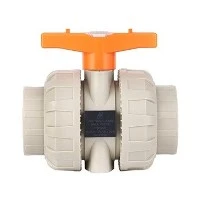
PPH True Union Ball Valve

PVDF True Union Ball Valve
2 . Check the sealing surface
- Scratches or impurities on the sealing surface can also cause leakage. Scratches may be caused by hard particles in the medium during the ball's rotation or by carelessness during installation and removal.
- Grinding can repair the sealing surface for minor scratches. When grinding, use appropriate grinding tools and paste and follow the correct grinding process to ensure the flatness and finish of the sealing surface. If the sealing surface is severely damaged, the entire sealing assembly may need to be replaced.
- When there are impurities on the sealing surface, the ball valve needs to be disassembled to clean the impurities on the sealing surface and around it. When reassembling the ball valve after cleaning, be careful to prevent impurities from entering again.
3. Check the valve closing condition
- Failure to close the valve properly can also cause leakage. This may be due to problems with the transmission mechanism, such as a bent valve stem, a loose handwheel, or an improper stroke setting of the electric actuator.
- For cases where the valve stem is bent, the valve stem needs to be replaced or corrected. If the handwheel is loose, tighten the fixing nut of the handwheel. For electric actuators, the stroke needs to be readjusted to ensure that the valve can be completely closed.
Troubleshooting of valve stem jamming
1. Check the fit between the valve stem and the stuffing box
- A common cause of valve stem jamming is that the valve stem and the stuffing box are too tight. This may be caused by excessive packing when the stuffing box is installed, or by deviation in the machining size of the valve stem.
- The solution is to adjust the clearance between the valve stem and the stuffing box. If the packing is too much, some packing can be removed appropriately. At the same time, ensure that the packing is installed evenly to avoid local overtightening.
2 . Check the packing status
- Aging and dry packing can also cause the valve stem to jam. During long-term use, the packing may lose its lubricity, especially in high-temperature and dry working environments.
- At this time, the aged packing needs to be replaced. When replacing the packing, choose the appropriate packing material, such as graphite packing, polytetrafluoroethylene packing, etc., and add an appropriate amount of grease after installation to maintain the flexibility of the valve stem.
3. Clean impurities
- Impurities in the medium entering the gap between the valve stem and the valve body will cause the valve stem to get stuck. For example, in a pipeline that transports water containing sediment, sediment may enter the gap.
- To disassemble the ball valve, clean the impurities in the gap between the valve stem and the valve body. After cleaning, you can apply some anti-corrosion and lubricating grease to the gap to prevent impurities from entering again.
Troubleshooting for inflexible ball rotation
1. Clean foreign matter
- Foreign matter stuck between the ball and the valve seat will cause the ball to rotate inflexibly. These foreign matter may be welding slag, rust or other impurities in the pipeline.
- The ball valve needs to be disassembled to clean the foreign matter between the ball and the valve seat. When installing the ball valve, ensure that the pipeline is clean. Before the initial operation of the pipeline system, impurities can be removed by flushing the pipeline.
2. Check the bearing
- Damage to the bearing will affect the rotation of the ball. Bearings may be damaged due to long-term heavy loads, poor lubrication or impurities.
- For damaged bearings, replace them in time. When replacing bearings, choose bearings of reliable quality and suitable for the working conditions of the ball valve, install them according to the correct installation method, and ensure that the bearings are well lubricated.
3. Check the deformation of the valve stem
- The deformation of the valve stem will cause the ball to rotate inflexibly. The deformation of the valve stem may be caused by external impact, improper installation or long-term excessive torque.
- For deformed valve stems, correct or replace them according to the degree of deformation. When operating the ball valve, avoid using excessive force to turn the handwheel. For electric or pneumatic ball valves, ensure that the output torque of the actuator is within a reasonable range.