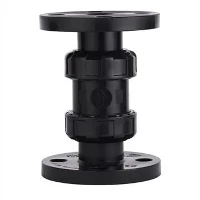
Take you to understand the classification of check valves. Check valves can be divided into rotary check valves (rotating according to the center of gravity) and lifting check valves (moving along the axis).
Among them, the internal thread check valve and butterfly check valve belong to this type of valve. It includes a swing check valve and a lift check valve. The rotary check valve has a hinge mechanism and door. The same disc rests freely on the sloping seat surface. To ensure that the disc reaches the correct position on the seat surface every time, the disc is hinged, so the disc has enough space to unscrew, and the disc is truly in full contact with the seat. The disc can be made entirely of metal or inlaid with leather, rubber or synthetic material coverings depending on performance requirements. When a swing check valve is fully open, fluid pressure is virtually unimpeded, so there is relatively little pressure drop across the valve. The disc seat of the lift check valve is located on the sealing surface of the valve seat on the valve body. Except for the disc, which can be raised and lowered freely, the rest of the valves are like globe valves. Hydraulic lifts the disc from the sealing surface of the seat. The backflow of the medium causes the disc to fall back to the seat and shut off the flow. Depending on the conditions of use, the disc can be an all-metal structure, or it can be in the form of a rubber pad or rubber ring embedded in the disc holder. Like the globe valve, the passage of fluid through the lift check valve is also very narrow, so the pressure drop across the lift check valve is greater than that of the swing check valve, and the flow rate of the low temperature check valve is rarely restricted.