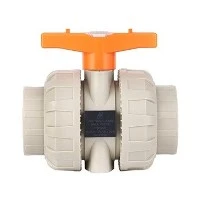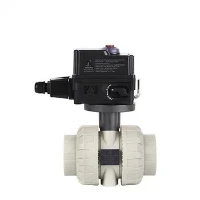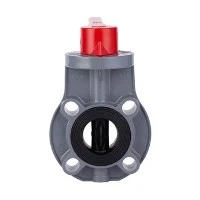
Among many valve types, PVC butterfly valves stand out for their excellent corrosion resistance and are widely used in many industries such as chemical industry, environmental protection, and water treatment. So, what are the corrosion resistance advantages of PVC butterfly valves?
The material itself has strong corrosion resistance
PVC, or polyvinyl chloride, is a thermoplastic resin made from vinyl chloride monomers through polymerization. Its molecular structure is stable and contains a large number of chlorine atoms. The presence of chlorine atoms enhances the interaction between PVC molecular chains. At the same time, chlorine atoms themselves have high electronegativity and can attract electron clouds, so that a relatively stable electron cloud structure is formed on the surface of PVC molecules. This structure makes Pvc Butterfly Valves highly resistant to common chemicals such as acids, alkalis, and salts. For example, in chemical production, strong acids such as hydrochloric acid and sulfuric acid and strong alkalis such as sodium hydroxide are often exposed. PVC butterfly valves can work stably for a long time and will not leak due to corrosion like metal valves.
Smooth surface and not easy to adhere to corrosive media
The surface of PVC butterfly valves is very smooth, which is a characteristic of its material during the molding process. The smooth surface makes it difficult for corrosive media to adhere and accumulate. Compared with the rough surface of metal valves, PVC butterfly valves reduce the possibility of corrosive media forming a local corrosive environment on the valve surface. For example, in a water treatment system, the water may contain various impurities and microorganisms. If these substances adhere to the valve surface, they will react chemically with the valve material and accelerate corrosion. The smooth surface of the PVC butterfly valve can effectively reduce the attachment of impurities and microorganisms, thereby reducing the risk of corrosion and extending the service life of the valve.

Insulation prevents electrochemical corrosion
PVC is a good insulator, and this property is of great significance for preventing electrochemical corrosion. In many industrial environments, there are different electrolyte solutions. When metal valves are in such an environment, due to the conductivity of the metal, they will form a primary battery with the electrolyte solution, causing electrochemical corrosion of the metal. Due to its insulation, the PVC butterfly valve will not participate in this electrochemical process, fundamentally eliminating the occurrence of electrochemical corrosion. For example, on the production line of the electroplating industry, the electroplating solution is usually a strong electrolyte solution. The use of PVC butterfly valves can ensure that the valves can operate stably in this highly corrosive electrolyte environment and avoid damage due to electrochemical corrosion.
Strong weather resistance and adaptability to a variety of environments
PVC butterfly valves have excellent weather resistance and can adapt to a variety of harsh natural and industrial environments. Whether in tropical areas with high temperature and high humidity or in cold and dry polar areas, PVC butterfly valves can maintain their corrosion resistance. Under ultraviolet light, PVC butterfly valves will not age or become brittle like some plastic materials, thus affecting their corrosion resistance. This is because the chlorine atoms in the PVC molecular structure can absorb ultraviolet rays and convert their energy into harmless heat energy, thereby protecting the molecular chain from being destroyed. In outdoor water supply and drainage systems and some open-air chemical plants, the weather resistance advantages of PVC butterfly valves are fully reflected, and they can work stably for a long time, reducing maintenance and replacement costs.
Good chemical stability and resistance to a variety of corrosive media
PVC butterfly valves have good chemical stability to most organic solvents, oxidants, reducing agents, etc. In chemical production, various complex chemical reactions are often involved, and different types of chemicals need to be transported. PVC butterfly valves can remain stable in these complex chemical environments and do not react chemically with corrosive media. For example, in the pharmaceutical industry, some highly oxidizing chemical reagents are used for drug synthesis. PVC butterfly valves can safely transport these reagents to ensure the smooth progress of the production process. At the same time, PVC butterfly valves can also tolerate some reducing chemicals. Its chemical stability makes it play an important role in the transportation of various chemical media.