Chemical Pipeline Maintenance and Union Stability
A true union ball valve is chosen because it can be removed without cutting the whole pipe. In chemical service, that maintenance advantage can turn into a risk when vibration, pipe movement, or thermal expansion gradually affects the union connection.
A fixed lock system gives maintenance teams an extra level of control. It helps keep the union in its intended position when the line operates near pumps, chemical tanks, vibrating equipment, or hotter process areas where pipe movement is more likely.
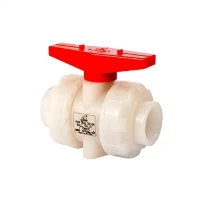
For acid and alkali pipelines, wastewater systems, chemical pump isolation points, and regularly serviced process lines, the PPH True Union Ball Valve With Fixed Lock System gives buyers a more maintenance-focused option than a standard union ball valve.
The Maintenance Problem Is Not the Union Itself
A standard true union ball valve is useful because the valve body can be removed for inspection, cleaning, seat adjustment, or replacement. That is a major advantage over a permanently bonded valve in a chemical line.
The challenge starts when the installation environment is not stable. Pump vibration, pipe expansion, thermal cycling, poor support spacing, repeated service work, and operator handling can all affect the union area over time. The result may be a union nut that needs repeated checking, a valve that shifts from its intended position, or a maintenance point that becomes harder to manage safely.
Maintenance reality: In a clean, low-vibration utility line, a normal true union valve may be enough. In a chemical pump zone, an acid transfer line, or a pipe run with thermal movement, the question changes from "Can the valve be removed?" to "Can the union stay stable between maintenance cycles?"
What a Fixed Lock System Adds
A fixed lock system does not replace correct pipe support, proper union tightening, chemical compatibility checks, or plant maintenance procedures. Its value is more specific: it helps keep the union connection in the intended position when the working environment makes unintended movement more likely.
| Fixed Lock Value | Why It Matters During Maintenance |
|---|---|
| Helps hold the union position | Useful where vibration or pipe movement can gradually affect the union nut after installation. |
| Supports safer planned servicing | Maintenance teams can work from a clearer, more controlled valve position instead of treating the union as a part that may have shifted in service. |
| Improves repeatability | Useful for equipment builders and contractors who want the same maintenance arrangement across repeated skids or chemical line modules. |
| Adds value in harsh locations | More relevant near pumps, scrubbers, tanks, outdoor chemical systems, and higher-temperature process sections than on a simple low-risk utility branch. |
Do not overstate the feature: A fixed lock helps control union stability. It does not make an unsupported pipe safe, correct an incompatible seal, stop chemical attack, or replace a plant lockout and maintenance procedure.
Where Fixed Lock True Union Valves Make Sense
The lock system is not needed on every plastic valve. It becomes valuable where the cost of unexpected maintenance, chemical exposure, or pipe disassembly is higher than the added cost of a maintenance-focused valve structure.
| Pipeline Location | Why Fixed Lock Is Worth Reviewing | Key Check Point |
|---|---|---|
| Acid or alkali transfer line | The line may need controlled isolation and regular inspection, especially near tanks, transfer pumps, or dosing areas. | Confirm chemical name, concentration, temperature, pressure, PPH suitability, and seal material. |
| Chemical pump inlet or outlet | Pump vibration and planned pump servicing make a stable removable valve arrangement more valuable. | Check pump vibration, pipe support, union access, pump discharge pressure, and service clearance. |
| Wastewater treatment skid | Mixed wastewater, frequent maintenance, and compact skid layouts can make fast replacement important. | Confirm solids level, chemical additions, pH range, temperature, and whether a ball or diaphragm valve fits the duty. |
| Scrubber circulation line | Outdoor installation, vibration, hot wet air, and thermal movement can create a tougher connection environment. | Check outdoor exposure, pipe movement, pump duty, chemical mist, and actuator need. |
| Regular inspection point | Useful where the valve must be removed as part of a defined preventive-maintenance cycle. | Make sure the maintenance team has safe access to the handle, union nuts, lock feature, and pipe supports. |
Fixed Lock vs Standard True Union vs Diaphragm Valve
A fixed lock valve is not a replacement for every other valve structure. The correct choice depends on whether the main problem is removable maintenance, union stability, precise flow control, back pressure, solids, or chemical isolation.
| Valve Direction | Best Fit | When It May Not Be Enough |
|---|---|---|
| PPH True Union Ball Valve | Routine chemical line isolation, removable maintenance, and normal industrial service where union stability is not a major concern. | Review fixed lock when vibration, thermal expansion, or repeat service creates a higher chance of union movement. |
| PPH Fixed Lock True Union Ball Valve | Chemical maintenance points exposed to vibration, thermal movement, repeat disassembly, or a stronger requirement for stable union positioning. | It does not replace chemical compatibility checks, pipe support, safe isolation, or control-valve duties. |
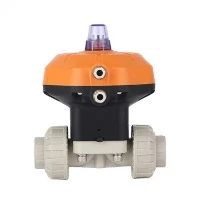
| Diaphragm Valve | Process duties that need better throttling behavior, sensitive shutoff, back-pressure consideration, or more controlled flow adjustment. | A diaphragm valve may add cost or be unnecessary for a simple full-open/full-close isolation point. |
For broader structure comparison, review the full SANKING Ball Valve range before confirming the final maintenance strategy.
Do Not Separate Lock Stability From Chemical Compatibility
The fixed lock feature solves a mechanical maintenance issue. It does not decide whether PPH is the right body material for the fluid. Chemical compatibility, seal selection, temperature, pressure, and line environment still come first.
| Condition to Confirm | Why It Matters for a Fixed Lock Valve |
|---|---|
| Chemical name and concentration | The valve body and seal must be compatible with the real medium before the lock system adds any value. |
| Working temperature | Temperature affects material margin, seal behavior, pipe expansion, and the importance of stable union positioning. |
| Pressure and pump duty | Pump discharge pressure, pressure pulses, and vibration can influence both valve selection and pipe-support requirements. |
| Seal material | EPDM, Viton, PTFE, or another seal direction must be confirmed separately for the chemical condition. |
| Site environment | Acid mist, humidity, washdown, outdoor exposure, and vibration can affect the whole valve assembly and maintenance plan. |
For material and application comparison, review the PPH Ball Valve category before finalizing the fixed lock requirement.
Recommended Maintenance and Removal Sequence
Chemical valve maintenance should always follow the plant's approved safety procedure. The sequence below is a planning guide for maintenance teams and project engineers. It is not a replacement for site-specific lockout, flushing, PPE, permit, or chemical-handling requirements.
| Step | Maintenance Action | Why It Matters |
|---|---|---|
| 1 | Identify the medium, line function, and downstream equipment before work starts. | The team needs to know whether the valve isolates acid, alkali, wastewater, rinse liquid, or another chemical process. |
| 2 | Shut down, isolate, depressurize, drain, and flush the line according to the approved plant procedure. | Do not start union removal while chemical pressure, trapped liquid, or unsafe residue may remain in the line. |
| 3 | Verify lockout and tagout requirements, PPE, chemical handling controls, and maintenance authorization. | A removable union valve is easier to service, but chemical exposure and stored energy still need to be controlled. |
| 4 | Support the pipeline and check that adjacent pipe sections will not shift when the valve body is removed. | Pipe movement can create stress on the union area and make reassembly less reliable. |
| 5 | Release or disengage the fixed lock according to the supplied product instructions before loosening the union connection. | The lock feature should be handled as a controlled part of the maintenance sequence, not forced or bypassed. |
| 6 | Remove the valve body, inspect the ball, seats, stem area, O-rings, union surfaces, and signs of chemical attack or residue. | Inspection helps catch swelling, cracking, deposits, rising torque, or seal damage before the valve returns to service. |
| 7 | Reassemble with clean sealing surfaces, correct parts, proper alignment, and the approved tightening method. | Correct reassembly protects the union, valve seats, and pipe alignment. |
| 8 | Re-engage the lock, complete the approved leak check, document maintenance work, and return the line to service according to site procedure. | This closes the maintenance loop and helps the next service team understand the valve history. |
When a Fixed Lock Requirement Should Be Written Into the RFQ
"PPH true union ball valve" is not detailed enough when the project needs a lock feature. The lock requirement should be written clearly in the RFQ, drawing, project specification, or spare-parts list.
| RFQ Field | What to Provide |
|---|---|
| Valve structure | PPH true union ball valve with fixed lock system. |
| Application location | Chemical pump inlet or outlet, tank outlet, scrubber line, wastewater skid, acid/alkali transfer line, or planned maintenance point. |
| Medium | Exact chemical name, wastewater source, acid or alkali type, concentration, and whether the medium changes during production. |
| Temperature and pressure | Normal temperature, maximum temperature, working pressure, pump pressure, pressure pulses, and thermal expansion concern. |
| Vibration condition | State whether the valve is installed near a pump, blower, mixer, skid frame, or other vibration source. |
| Connection and standard | Socket or threaded connection; ANSI, DIN, JIS, CNS, NPT, PT, BSPF, or project-specific standard. |
| Seal material | EPDM, Viton, PTFE, or supplier-confirmed option based on the chemical and temperature. |
| Maintenance requirement | Expected inspection interval, spare valve plan, replacement O-ring requirement, and whether maintenance records need to be labeled. |
| Quantity plan | Sample quantity, project quantity, critical-line spare quantity, annual maintenance demand, or distributor stock plan. |
Quotation note: Add "Fixed Lock Required: Yes" as a separate line in the RFQ. This avoids receiving a standard true union valve when the site specifically needs stronger union stability during vibration or thermal movement.
Final Selection Logic
Choose a standard true union ball valve when the line needs removable maintenance and the installation is stable, well supported, and not exposed to serious vibration or thermal movement.
Choose a fixed lock true union ball valve when the line is close to pumps, exposed to vibration, affected by thermal expansion, regularly dismantled, or treated as a higher-risk maintenance point in a chemical system.
Choose a diaphragm valve when the process requires more than basic on/off isolation, such as tighter flow adjustment, back-pressure control, or a more specialized process duty.
The lock system should be treated as a maintenance-safety requirement, not a cosmetic upgrade. Confirm it together with the medium, PPH suitability, seal material, pressure, temperature, connection standard, vibration condition, and maintenance plan.
Need a Fixed Lock Valve for a Chemical Maintenance Point?
Send the medium, concentration, working temperature, pressure, pipe size, connection standard, valve location, vibration condition, seal material, maintenance interval, and expected quantity. SANKING can help confirm whether a PPH fixed lock true union ball valve is the right direction for your chemical line.
Request Fixed Lock Valve Details Explore PPH Ball Valve Options