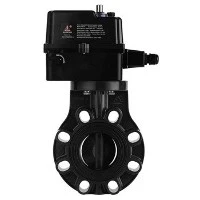
Butterfly valves are widely used in various industries for regulating flow, and they come in different types, including wafer butterfly valves and lug butterfly valves. Both types are manufactured using various materials like PVC, CPVC, PPH, and PVDF, each suited to different applications. Here's an in-depth look at the differences between wafer and lug butterfly valves, with a focus on the materials and the SANKING brand.
1. Design and Structure
Wafer Butterfly Valve:
Body Design: Wafer valves have a compact, lightweight body designed to fit between two flanges.
Bolt Holes: Typically, wafer valves do not have bolt holes, or they have through-bolt holes that align with the flanges on either side of the valve.
Installation: Wafer valves are sandwiched between flanges and are held in place by the bolts of the surrounding pipeline flanges.
Lug Butterfly Valve:
Body Design: Lug valves have a more robust body with protruding lugs (ears) that are drilled to match the bolt holes of the flanges.
Bolt Holes: Lug valves have threaded bolt holes that allow them to be bolted directly to the flanges on either side.
Installation: Lug valves are bolted directly to the flanges, providing a more secure and reliable installation.
2. Function and Application
Wafer Butterfly Valve:
Primary Use: Wafer valves are typically used in applications where a tight seal is required but where the valve does not need to be removed frequently.
Flow Control: Suitable for both on/off and throttling services.
Pressure Tolerance: Generally lower pressure ratings compared to lug valves.
Isolation: Wafer valves do not allow for the downstream side of the valve to be isolated independently.
Lug Butterfly Valve:
Primary Use: Lug valves are often used in applications requiring frequent maintenance or where the system needs to be dismantled.
Flow Control: Similar to wafer valves, they are used for on/off and throttling services.
Pressure Tolerance: Higher pressure ratings, making them suitable for more demanding applications.
Isolation: Lug valves can isolate either side of the piping system, allowing for maintenance on one side while keeping the other operational.
3. Material Considerations
PVC (Polyvinyl Chloride):
Properties: Excellent chemical resistance, lightweight, and easy to install.
Applications: Ideal for water treatment, chemical processing, and general industrial applications.
SANKING Products: SANKING's PVC butterfly valves are known for their durability and reliability in a variety of environments.
CPVC (Chlorinated Polyvinyl Chloride):
Properties: Higher temperature tolerance than PVC, excellent chemical resistance.
Applications: Suitable for hot water and corrosive chemicals.
SANKING Products: SANKING offers CPVC butterfly valves that are perfect for applications requiring higher temperature resistance.
PPH (Polypropylene Homopolymer):
Properties: High impact strength, excellent chemical resistance, and lightweight.
Applications: Widely used in chemical processing, water treatment, and industrial applications.
SANKING Products: SANKING's PPH butterfly valves are designed for high durability in harsh chemical environments.
PVDF (Polyvinylidene Fluoride):
Properties: Exceptional chemical resistance, high purity, and suitable for high-temperature applications.
Applications: Ideal for ultra-pure water systems, chemical processing, and semiconductor industries.
SANKING Products: SANKING's PVDF butterfly valves are chosen for their superior performance in the most demanding applications.
4. Installation and Maintenance
Wafer Butterfly Valve:
Installation: Easier and quicker to install due to their lightweight and fewer bolts required.
Maintenance: Less convenient for maintenance as they require the removal of the entire valve from the system.
Lug Butterfly Valve:
Installation: More time-consuming due to the need to bolt the valve directly to the flanges, but offers a more secure installation.
Maintenance: Easier to maintain and replace parts, as one side can remain bolted while servicing the other side.
5. Cost Considerations
Wafer Butterfly Valve:
Cost: Generally lower in cost due to simpler design and fewer materials required.
Applications: Preferred in systems where cost savings are essential and where the valve is not frequently operated.
Lug Butterfly Valve:
Cost: Higher initial cost due to more robust construction and additional materials.
Applications: Worth the investment in systems requiring frequent maintenance or higher pressure and more demanding conditions.
SANKING Brand
SANKING is a trusted name in the industry, known for manufacturing high-quality valves made from PVC, CPVC, PPH, and PVDF. Their products are widely recognized for their durability, reliability, and excellent performance across a range of industrial applications. Whether you need a wafer or lug butterfly valve, SANKING provides solutions that meet the rigorous demands of various industries.