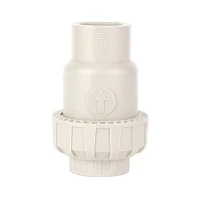
PVC pipe fittings are widely used in plumbing and construction projects due to their durability, affordability, and ability to resist corrosion. Two common types of fittings used in PVC pipe systems are spigots and sockets. While these two terms are often used interchangeably, they have distinct differences.
Spigot is a term used to describe a male end of a PVC pipe that fits into a female or socket end. The spigot end is narrower than the socket end and has a smooth, unthreaded exterior. Spigots are inserted into sockets to create a secure and leak-proof joint.
Socket, on the other hand, refers to the female end of a PVC pipe that receives the spigot end. It has a wider diameter than the spigot end and is typically threaded to allow for a secure attachment to another pipe or fitting.
In summary, spigots are male ends of PVC pipes, while sockets are female ends that receive spigots. Spigots are narrower and unthreaded, while sockets are wider and typically unthreaded.
Understanding the differences between spigots and sockets is crucial for anyone working with PVC pipe fittings. Using the wrong type of fitting can lead to leaks and other issues. By selecting the correct spigot and socket fittings for your project, you can ensure that your PVC pipe system functions properly and lasts for years to come.