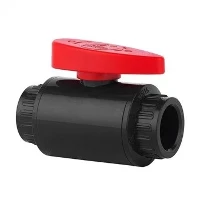
PVC ball valves are widely used in water treatment, chemical processing, irrigation systems, swimming pools, and industrial piping networks. They are lightweight, corrosion-resistant, cost-effective, and easy to install. However, like any mechanical component, PVC ball valves can develop problems over time, especially when exposed to demanding operating conditions or improper installation.
Why PVC Ball Valves Are So Popular?
Before discussing common problems, it's worth understanding why PVC ball valves are widely used across industries.
Their key advantages include:
- Excellent corrosion resistance
- Lightweight construction
- Easy installation
- Low maintenance requirements
- Affordable cost compared to metal valves
- Suitable for water, chemical, and wastewater applications

Despite these benefits, improper use can lead to performance issues.
Valve Leakage
Leakage is one of the most common complaints associated with PVC ball valves.
Leaks may occur around the valve body, threaded connections, unions, or stem seals.
Possible Causes
- Worn sealing components
- Improper installation
- Excessive system pressure
- Loose connections
- Aging PVC material
Regular inspections can help identify small leaks before they become major problems.
Difficult Valve Operation
A PVC ball valve should open and close smoothly. If the handle becomes difficult to turn, internal wear or contamination may be the cause.
Possible Causes
- Mineral buildup
- Debris inside the valve
- Chemical residue accumulation
- Long periods without operation
- Damaged ball or seat
In industrial applications, preventive maintenance significantly reduces this issue.
Cracking or Physical Damage
PVC is highly resistant to corrosion, but it can be vulnerable to impact damage and extreme temperatures.
Possible Causes
- Mechanical impact during installation
- Excessive tightening
- Freezing conditions
- Exposure to temperatures beyond design limits
- Poor-quality raw materials
Visible cracks should never be ignored, as they can quickly lead to system failure.
Seat and Seal Wear
The seats inside a ball valve create the seal between the ball and valve body. Over time, these components can wear out.
Possible Causes
- Frequent operation
- Abrasive particles in the fluid
- Chemical attack
- High-pressure applications
Proper material selection is essential for maximizing service life.
Valve Not Fully Closing
Sometimes a PVC ball valve appears closed but still allows a small amount of flow.
Possible Causes
- Debris trapped around the ball
- Damaged sealing surfaces
- Worn seats
- Internal component deformation
For systems requiring reliable shut-off, regular inspection is recommended.
Chemical Compatibility Problems
Although PVC is resistant to many chemicals, it is not suitable for every application.
Possible Causes
- Exposure to incompatible chemicals
- Incorrect valve material selection
- Long-term chemical degradation
Choosing the right material from the start prevents costly replacements later.
Products Description

Many valve failures can be avoided through proper product selection and maintenance.
Best practices include:
- Choose valves rated for the system pressure and temperature.
- Verify chemical compatibility.
- Follow correct installation procedures.
- Inspect valves regularly.
- Operate valves periodically.
- Replace worn seals before failure occurs.
- Purchase from experienced valve manufacturers with proven quality control.
A highque needs, and safety considerations before selecting a valve.
We provide high-quality ball valves, check valves, and industrial piping solutions for water treatment, chemical processing, irrigation, and industrial applications worldwide. Our team can help you select the right valve for your project and ensure reliable long-term performance.