OEM Water Treatment Valve Selection
For OEM water treatment equipment, the choice between a compact ball valve and a true union ball valve is not only about valve price. The better question is where the valve sits inside the machine, how often it needs service, and whether the user can replace it without cutting the pipe.
Compact valves help save space and cost inside small equipment. True union valves are better when the valve needs to be removed, cleaned, or replaced during scheduled maintenance.
For equipment builders comparing both structures, the PVC Ball Valve category is the best starting point to review compact, true union, manual, and actuated options from SANKING.
Start With the Equipment Layout, Not the Valve Name
In OEM water treatment machines, filtration units, pool circulation systems, and compact dosing equipment, the valve is part of the machine layout. It is not just a pipe accessory.
A compact valve may look attractive because it takes less room and helps control the bill of materials. A true union valve costs more and needs more installation length, but it can save real service time when the equipment needs maintenance.
Field point: If the valve is buried deep inside the machine and the service team cannot cut and rebuild the pipe during maintenance, a true union design is often worth the higher cost. If the valve is used on a simple branch line with little service demand, compact is often enough.
Quick Decision Table for OEM Equipment
The easiest way to compare compact and true union valves is to check four things: equipment space, maintenance cycle, replacement method, and spare parts cost.
| Decision Point | Choose Compact Ball Valve When... | Choose True Union Ball Valve When... |
|---|---|---|
| Equipment space | The valve is installed inside a small machine, cabinet, skid, or tight pipe loop. | There is enough installation length for union nuts and future valve removal. |
| Maintenance cycle | The valve is not expected to be removed often after installation. | The valve sits near filters, pumps, chemical points, or service positions that need regular inspection. |
| Replacement method | The equipment design allows full pipe replacement or the valve is low-risk and easy to access. | The user needs to remove the valve without cutting pipe or disturbing the whole system. |
| Stocking cost | The OEM project needs lower unit cost and simple bulk stocking. | The OEM wants a service-friendly model for replacement programs, distributors, or after-sales kits. |
When Compact Ball Valves Fit Better
A compact ball valve is the right choice when the valve needs to fit inside a tight machine layout and the system does not require frequent valve removal.
This is common in small water treatment machines, compact filtration units, under-sink systems, pool circulation packages, small pump assemblies, and equipment internal pipe loops.
| Compact Valve Advantage | What It Means for OEM Buyers |
|---|---|
| Shorter body length | Helps fit the valve inside narrow cabinets, equipment frames, and tight pipe runs. |
| Lower unit cost | Better for high-volume equipment production where every component affects the BOM. |
| Simple on/off use | Works well for isolation points, drain points, bypass lines, and non-critical internal shut-off positions. |
| Easy bulk stocking | Useful for distributors and OEM factories that stock common sizes for repeated equipment models. |
For simple equipment shut-off points, the PVC Compact Ball Valve is a practical option when space and cost are the main concerns.
Do not overuse compact valves: If the valve is near a filter housing, dosing pump, pump outlet, or service position that may need disassembly, compact construction can make future maintenance harder.
When True Union Ball Valves Are Worth the Extra Cost
A true union ball valve is the better choice when the valve needs to be removed from the pipeline for maintenance, cleaning, seal inspection, or replacement.
In OEM water treatment equipment, this matters around pumps, filters, resin tanks, UV units, chemical dosing points, and any position where the service team may need to open the system later.
| True Union Advantage | What It Means for Equipment Design |
|---|---|
| Removable valve body | The valve can be removed without cutting the pipeline when union nuts are accessible. |
| Better for service points | Useful near filter housings, pump inlet and outlet, chemical injection points, and maintenance shut-off positions. |
| Cleaner after-sales work | Helps distributors and service teams replace the valve as a part instead of rebuilding the pipe section. |
| Better long-term value | Higher initial cost can be offset by faster maintenance and lower downtime in equipment service. |
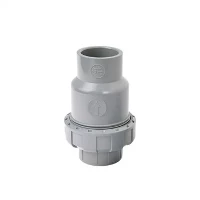
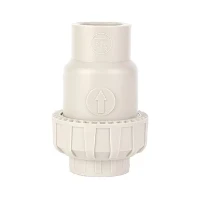
For service-friendly equipment designs, the PVC True Union Ball Valve is a stronger fit than a compact valve when future removal is part of the maintenance plan.
Where Each Valve Fits Inside Water Treatment Equipment
Valve location is one of the clearest ways to decide. The same equipment can use both compact and true union valves in different positions.
| Equipment Position | Better Choice | Reason |
|---|---|---|
| Inside a compact machine cabinet | Compact ball valve | Saves installation space and keeps the internal pipe layout simple. |
| Pump inlet and outlet | True union ball valve | Pumps need service access. Union ends make removal and replacement easier. |
| Before and after filter housing | True union ball valve | Filters are opened, cleaned, and replaced. Isolation valves should support maintenance. |
| Drain, sample, or simple bypass line | Compact ball valve | The line is simple, low-risk, and does not need frequent valve removal. |
| Chemical dosing or disinfectant line | True union or special structure after review | Seal material, chemical compatibility, gas release, and service frequency need confirmation. |
| Pool circulation equipment | Both, based on position | Compact works for tight internal lines. True union is better around pumps, filters, and maintenance points. |
Do Not Ignore Medium and Seal Material
Compact vs true union is a structure decision. It does not replace material selection. OEM buyers still need to confirm the water quality, chemical exposure, temperature, pressure, and seal material.
For clean water or pool circulation systems, PVC with suitable seals is often used. For dosing lines, disinfectant systems, acid/alkali treatment, or industrial wastewater, the buyer should confirm whether PVC is enough or whether CPVC, PPH, or PVDF needs to be reviewed.
Practical point: If the equipment handles sodium hypochlorite or another medium that can release gas, do not make the decision only between compact and true union. Check gas release, vented ball requirements, EPDM/Viton compatibility, installation direction, and maintenance frequency before final approval.
| Selection Item | What OEM Buyers Should Confirm |
|---|---|
| Valve body | PVC, CPVC, PPH, or PVDF based on fluid, temperature, pressure, and chemical exposure. |
| Seal material | EPDM or Viton should be selected based on the medium, concentration, and service condition. |
| Operating pressure | Check normal pressure, pump pressure, and possible pressure pulses. |
| Temperature | Confirm both normal and maximum working temperature, especially near pumps and chemical tanks. |
| Maintenance access | Leave enough space for handle operation, union nut removal, pipe support, and tool access. |
Pipe Size and Connection Standard Matter
OEM equipment builders often buy the same valve in different batches. Small differences in pipe standard can create installation problems, leakage complaints, and extra warehouse pressure.
Before quotation, confirm the pipe size, connection type, and standard. Common requirements include socket, threaded, DIN, ANSI, JIS, CNS, NPT, PT, and BSPF. The valve should match the equipment pipe system, not only the nominal size.
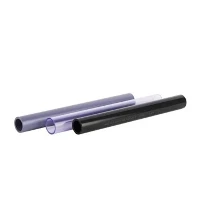
If the equipment uses matched plastic pipe systems, check the valve together with Plastic Pipes so the pipe standard, valve end, and installation method stay consistent.
Stocking Strategy for OEM Buyers and Distributors
For OEM production, the best valve is not always the cheapest valve. It is the valve that keeps assembly stable, maintenance simple, and inventory easy to control.
| Buying Situation | Better Stocking Logic |
|---|---|
| High-volume compact equipment | Use compact valves for repeated internal shut-off points and keep common sizes in bulk stock. |
| Service-heavy equipment | Use true union valves around pumps, filters, tanks, and chemical service points to reduce after-sales work. |
| Distributor inventory | Stock compact valves for price-sensitive replacement demand and true union valves for professional installation and maintenance projects. |
| Multi-model OEM equipment | Standardize pipe size, connection standard, and seal material as much as possible to reduce purchasing mistakes. |
RFQ Checklist Before Quotation
To quote the right compact or true union valve, the supplier needs more than product name and quantity. A clear RFQ reduces wrong samples, wrong connection standards, and repeated email confirmation.
| Information | What to Confirm |
|---|---|
| Valve structure | Compact ball valve, true union ball valve, or both for different equipment positions. |
| Application | Water treatment equipment, filtration unit, pool circulation system, dosing skid, or distributor stock. |
| Pipe size | DN size or inch size for each model. |
| Connection standard | Socket or threaded; DIN, ANSI, JIS, CNS, NPT, PT, BSPF, or project-specific standard. |
| Medium | Clean water, pool water, brine, disinfectant, acid, alkali, wastewater, or chemical dosing fluid. |
| Temperature and pressure | Normal working temperature, maximum temperature, normal pressure, and pump pressure. |
| Seal material | EPDM, Viton, or supplier recommendation based on service condition. |
| Quantity plan | Sample quantity, first order quantity, annual usage, and distributor stock plan. |
Final Selection Logic
Choose a compact ball valve when the equipment space is tight, the valve is used for simple on/off service, the line does not need frequent disassembly, and the OEM project needs better cost control.
Choose a true union ball valve when the valve sits near pumps, filters, chemical dosing points, or service positions where maintenance teams need to remove the valve without cutting the pipe.
For equipment builders and distributors still comparing sizes, connection standards, and structures, the SANKING PVC Ball Valve range can help match compact and true union options to real OEM water treatment equipment layouts.
For broader material and structure comparison, buyers can also review the full Ball Valve category before confirming the final valve model.
Need Compact or True Union Valves for OEM Equipment?
Send the equipment layout, pipe size, connection standard, medium, pressure, temperature, seal material, and expected order quantity. SANKING can help match compact and true union PVC ball valves to different positions inside water treatment machines, filtration units, and pool circulation systems.
Start with the PVC Ball Valve category, or compare the PVC Compact Ball Valve and PVC True Union Ball Valve for your OEM equipment design.